Brainspotting Therapy
in Los Angeles for
BIPOC, LGBTQ+ &
Trauma Survivors
Brainspotting is a somatic, body-based trauma therapy that targets trauma where it actually lives in the nervous system. Our trained Brainspotting therapists, Gonji Lee, LCSW #88522, Leslie Yick, AMFT #147779 / APCC #17060, and Christina Harrison, LCSW #99941, specialize in therapy using an anti-oppression framework for BIPOC, LGBTQ+, QTIBIPOC, and neurodivergent communities across Los Angeles and California.
What Is Brainspotting Therapy?
Brainspotting is a powerful somatic therapy model that targets acute, complex, and intergenerational trauma. It draws upon your body's inherent ability to heal.
Brainspotting is a body-based, somatic therapy based on the concept that where you look affects how you feel. Specific eye positions called "brainspots" correlate with areas of stored trauma, distress, and activation held deep in the brain and nervous system. By holding a gaze point that resonates with the target experience, Brainspotting creates the conditions for deep neurological processing that reaches where talk therapy alone cannot.
Brainspotting helps identify, process, and release emotional suffering, body pain, trauma, dissociation, and distress that feel stuck in core neurophysiological areas. It can be used for anxiety, depression, phobias, disrupted attachment, physical pain, performance blocks in athletes and artists, and the cumulative impact of living under systems of oppression.
When we use traditional talk therapy, we are operating from the neocortex, or the rational part of the brain. Trauma, however, changes neural connections in the subcortical brain. This is the area that handles subconscious processes like breathing, and our fight, flight, and freeze responses. That is why we can logically understand something about a negative experience and still feel or respond in ways that don't align. Brainspotting helps heal the subconscious brain where our deepest pain lives.
The eyes are understood to be a direct pathway to the brain. Brainspotting uses our field of vision to access the cluster of neurons involved in trauma, or what Dr. David Grand calls "trauma capsules." Focused and mindful processing then activates the brain's internal healing resources to release experiences that continue to feel distressing, without requiring you to narrate or relive them in detail.
How a Brainspotting Session Works
Your therapist helps you settle into a felt sense of a distressing experience, such as through body sensations, emotions, or stuck thought patterns. Using a pointer, they guide your gaze across your visual field to locate an eye position that activates the target material. Once a brainspot is found, you rest your gaze there while your brain processes naturally.
Your therapist gathers your history and builds trust as well as your resourcing skills before any active processing begins.
You notice the felt sense of a distressing experience. Perhaps through somatic reactions, emotional responses, thoughts, or images.
Your therapist slowly guides your gaze to find the eye position that activates and resonates with the target material.
You hold the gaze point while gentle bilateral music plays through headphones, supporting the nervous system as your brain processes.
Your therapist stays attuned throughout, helping you integrate shifts between sessions and adjust the work as it deepens.
Brainspotting for Trauma, Stress & Beyond
Brainspotting is particularly well-suited for experiences that feel stuck. They often manifest as somatic responses, perhaps in your chest, your gut, or your jaw. For others, it can feel like a stuck narrative or a feeling of numbness.
Psychosomatic Pain
Brainspotting is especially effective for trauma that manifests through subconscious processes, whether as chronic pain or disturbing dreams. Brainspotting can help you process the pain that lies beneath the surface.
Racial & Intergenerational Trauma
For BIPOC clients, trauma is often systemic and cumulative. Brainspotting can help you process racial injury, intergenerational pain, and the impact of being institutionally marginalized.
Identity-Based Harm
Experiences of homophobia, transphobia, xenophobia, misogyny and ableism are stored in the body just as any other trauma. Brainspotting offers a pathway for QTIBIPOC communities to process what systemic violence does to the nervous system.
Anxiety, Panic & Phobias
Brainspotting works directly with the subcortical brain where anxiety can take root. Clients often notice shifts in their baseline activation that feel more durable than cognitive techniques alone.
Dissociation & Shutdown
For those who freeze, disconnect, or go numb under stress, Brainspotting can be effective. Bilateral sound and relational attunement support the nervous system without pushing into overwhelm.
Performance & Creative Blocks
Athletes, artists, and performers use Brainspotting to work through performance blocks, the kind where visualization or positive thinking don't seem to help.
When Brainspotting May Not Be the Right Fit
Brainspotting is powerful, but it is not always the right starting point for everyone or every moment. Your therapist will help you decide if it's the right for you, and it may require further conversation if:
You're currently in acute crisis
If you are in an immediate mental health crisis, stabilization and safety come first. Your therapist will support you in first addressing the crisis before engaging in Brainspotting.
You haven't yet developed a toolkit of resources
Deep processing requires a baseline of nervous system regulation. If that foundation isn't there yet, we focus on grounding and resourcing first, sometimes drawing on DBT skills.
You're seeking medication or a medical evaluation
Brainspotting is psychotherapy, not medical or psychiatric treatment. If medication may be part of your care, we can connect you with a prescriber to supplement the brainspotting process.
During your free consultation, we'll talk honestly about whether Brainspotting is the right fit right now, or whether some pre-work or another approach may be more beneficial.
Brainspotting as Somatic Therapy in Los Angeles
Somatic therapy is any approach where healing is centered on the body, not just the mind. Brainspotting is a somatic therapy modality that Nokdu Therapy's team in Los Angeles offers.
The word "somatic" comes from the Greek word for body. Somatic therapies operate from a foundational understanding that trauma, stress, and emotional pain aren't just stored as memories or beliefs in the neocortex. They're stored as reflexive patterns deep in the subcortical brain and brainstem, which manifests through the nervous system, the muscles, the breath, and the posture. That's why many of us eventually hit a wall with talk therapy alone.
Brainspotting is a somatic therapy in the most precise sense: it uses the visual field as a direct access point to the subcortical brain, bypassing the neocortex entirely. Unlike body-scanning or breathwork approaches, it provides a specific, repeatable method for locating and processing the exact neural clusters where your distress is held.
Somatic therapy can be deeply effective for trauma, anxiety, identity-based stress, chronic pain, or creative blocks. Brainspotting offers a flexible approach that titrates activation levels, and guides you through mindful processing to finally work through stuck points that might feel out of your control.
Brainspotting processes trauma stored in the body and nervous system, not just in thought or memory.
Anxiety lives in the body, often in the chest, the jaw, the gut. Brainspotting can reach and regulate activation at its source.
Racial and intergenerational trauma manifest somatically. Brainspotting provides a pathway to process your experiences.
Brainspotting is fully effective via telehealth. Somatic processing doesn't require being in the same room. It requires attunement.
Brainspotting for BIPOC Communities in Los Angeles
For Black, Indigenous, and People of Color, trauma is experienced in a nuanced and complex way. Brainspotting might be the resource you've been looking for in processing those complex experiences.
Many of the most impactful forms of trauma that BIPOC communities carry cannot be reduced to a single incident. Microaggressions, racial profiling, medical racism, and the daily toll of navigating white-centered spaces all register in the nervous system and compound with intergenerational wounds that may not have been processed. While we can't heal from trauma that continues to happen, we can support our nervous system in mitigating the pain that comes from living under oppressive systems.
Standard trauma therapy frameworks were not built with BIPOC communities in mind. A somatic approach like Brainspotting is particularly valuable because it doesn't require you to verbally share a narrative that can put you back in a bad place. Your body knows what it carries. Brainspotting helps create the conditions for your nervous system to heal itself.
Our therapists bring lived experience to this work. You won't need to educate us on what it means to be BIPOC, a first-generation immigrant, or a queer nonbinary person navigating Los Angeles. We hold the complexity of your specific contexts alongside the therapeutic process.
Learn more about our general trauma therapy approach, and complementary resources like our BIPOC DBT Skills Group, where you can build skills to support you through somatic processing.
Process the cumulative weight of racism, microaggressions, and institutional harm stored in the nervous system. You can help tend to your pain and release some of it from the body so it feels less flooding.
Process intergenerational cycles rooted in survival, loss, and displacement passed through families across generations. Brainspotting reaches what may have been transmitted through family systems, embodied memory, and nervous system patterns long before we had words for it.
Get support as immigrants and first-generation communities navigating the impact of displacement, hypervigilance, and the grief of belonging nowhere fully.
Address harm experienced by medical institutions, law enforcement, and other systems that have historically failed and enacted violence upon BIPOC communities.
Brainspotting for LGBTQ+ and QTIBIPOC Communities
Queer, trans, intersex, and gender-nonconforming people carry somatic histories that are too often oversimplified by therapy that only works at the level of thought. The hypervigilance of moving through unsafe environments, the somatic memories of rejection and family estrangement, and the complex grief of coming out leave traces in the nervous system that Brainspotting is specifically positioned to reach.
For QTIBIPOC people, holding the intersection of queer and trans identity with BIPOC identity can lead to compounding trauma. Working with Brainspotting therapists at Nokdu doesn't require you to separate these parts of yourself to do the work. We invite in all aspects of you into the therapy process.
We understand the importance of gender identity, sexual orientation, and relationship structures in your life. It should be a part of the very fabric of every conversation. We integrate Brainspotting alongside LGBTQ+ affirming, Internal Family Systems, and Dialectical Behavioral Therapy approaches when relevant to your goals.
Homophobia, transphobia, and misogyny create dysregulation in the nervous system, not just emotional pain. Brainspotting can process what systemic harm does at a neurological level.
Grief and ambiguous loss related to family rejection and the process of claiming your own identity carry somatic weight that Brainspotting is well-suited to hold.
Brainspotting can complement gender-affirming care by working with nervous system responses around embodiment, safety, and identity without asking you to justify or explain.
Loss within queer communities is often unacknowledged by the wider world. Brainspotting creates space for that grief to be witnessed and moved through the body.
Brainspotting vs. EMDR: What's the Difference?
Both Brainspotting and EMDR (Eye Movement Desensitization and Reprocessing) are somatic, body-based therapies for trauma, and Nokdu has therapists trained in both. The most important distinction is in how each approach works with eye position and movement.
EMDR uses structured bilateral stimulation (eyes moving back and forth in a directed sequence) along with specific protocols and phases. It works particularly well for single-incident trauma and PTSD where a clear target memory can be identified. It has also been found to be effective for more complex traumas. Since EMDR has been around a lot longer, there are decades of research to back up its efficacy.
Brainspotting is a newer model, and is more open and relational. Rather than following a script, it locates a fixed point in the visual field that resonates with the target experience and holds it there. This makes it especially valuable for clients who find highly structured protocols activating or difficult to access. It can also be a preferable option for people who find it too activating to focus on a memory. With Brainspotting, you can start instead from a physical feeling, an emotional response, a thought or an image.
Many clients benefit from both. Your therapist will discuss which approach might be the right fit for your history and goals during your initial consultation.
| Brainspotting | EMDR | |
|---|---|---|
| Eye movement | Fixed gaze point | Directed bilateral |
| Structure | Open, relational | Phased protocol |
| Best for | Complex & somatic trauma | Single-incident PTSD |
| Narrative required? | No | Minimal |
| Bilateral sound | Often used | Varies |
What We've Learned as Brainspotting Therapists in Los Angeles
Beyond the research, here is some of what we've observed in our own work with QTIBIPOC, LGBTQ+, and neurodivergent clients across Los Angeles.
Clients often reach something words couldn't
Many people come to us after hitting a wall during years of talk therapy, and find they are finally able to feel less activated around deep wounds.
Our logical brain has its limits
Many clients with histories of trauma have developed strong intellectual skills to help them navigate through life. With Brainspotting, many learn that deep healing can come even when logic isn't always leading the process.
Our identities and contexts are crucial
For BIPOC, QTI and neurodivergent clients, understanding their experiences and normalizing their responses to their conditions are crucial to the healing process.
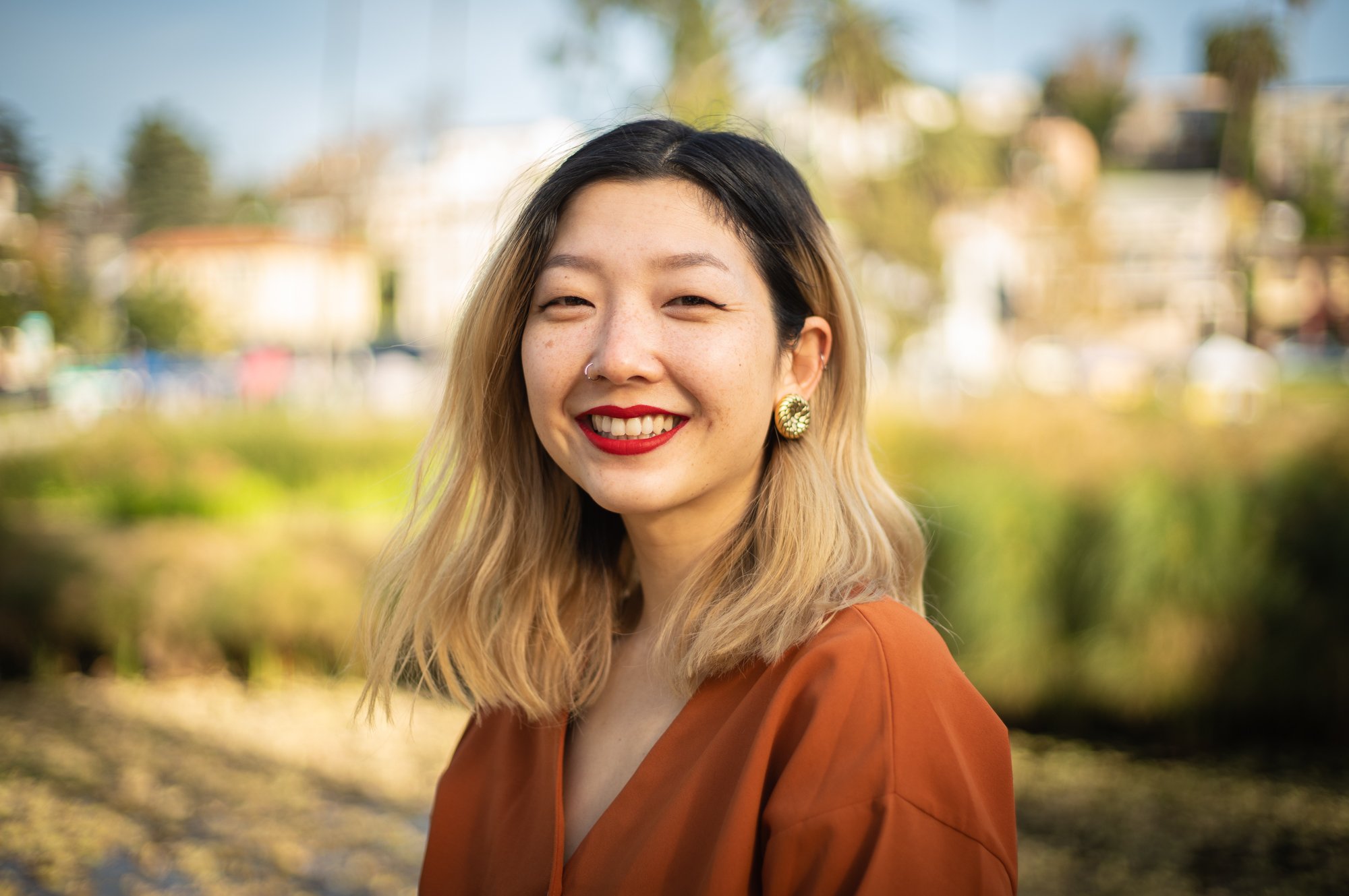
Meet Our Brainspotting-Trained Therapists
Our therapists bring clinical training, lived experience, and deep commitment to BIPOC, LGBTQ+, QTIBIPOC, and neurodivergent communities.


Your Path to Healing in LA
Starting Brainspotting therapy at Nokdu is meant to feel accessible, not clinical. Here's what to expect from the moment you reach out.
Free 20–30 Minute Consultation
We connect over video or phone with zero pressure. You'll share what's bringing you in, ask any questions you have, and we'll confirm whether Brainspotting is the right fit, or whether another modality might serve you better right now.
Intake & Getting to Know Your Nervous System
Your therapist spends time genuinely understanding your history, not just what happened, but how your nervous system has organized itself around it. We discuss your different identities, your relationships, and what has and hasn't worked in the past before co-creating a plan that makes sense for you specifically.
Stabilization & Resourcing
Before active Brainspotting processing begins, we invest time in building your capacity to tolerate and integrate what comes up. This includes grounding techniques, somatic resourcing, and nervous system regulation skills. This is not a detour. It is the foundation that makes deep processing possible without overwhelm.
Active Brainspotting Sessions
Sessions typically last 50 minutes unless you have signed up for a longer session (called an intensive). Your therapist locates the brainspot connected to your target experience and supports you through the processing with attuned presence and, often, bilateral sound. Many clients notice meaningful shifts within 6–12 sessions, though depth of history shapes the timeline.
Integration & Ongoing Support
Processing is only part of the work. As therapy deepens, sessions shift toward integrating what has changed and building resilience for the long term. Brainspotting can be combined with IFS, DBT, and other modalities as your work evolves. Telehealth available anywhere in California.
Brainspotting Therapy Across Greater Los Angeles
Telehealth sessions available to clients in Los Angeles and throughout California. Brainspotting is fully effective via secure video.
Common Questions About Brainspotting in LA
Do I have to talk about my trauma in detail to do Brainspotting?
No, and for many people, this is the most important thing to know. Brainspotting works at the subcortical level, which means it doesn't rely on verbal narration. You'll hold an awareness of the target experience in your body while your gaze rests on a specific point, but you don't need to tell the story, relive it in detail, or find words for what happened. Many clients find this significantly less activating than talk therapy.
How is Brainspotting different from regular talk therapy?
Talk therapy primarily works through the prefrontal cortex, or the part of the brain that manages language, reasoning, and insight. Trauma is stored in the subconscious, in the parts of the brain that are nonverbal. Brainspotting bypasses the need for narrative and accesses traumatic material directly through the body and the visual field. Many people make breakthroughs in Brainspotting that years of talk therapy never reached.
Can I do Brainspotting therapy online in California?
Yes. Brainspotting is fully effective via secure video sessions. The nervous system responds to the bilateral sound and to the relational attunement of the therapist regardless of physical proximity. We offer online Brainspotting therapy to clients throughout Los Angeles and across all of California, including the Bay Area, San Diego, Sacramento, and everywhere in between.
How many Brainspotting sessions does it take to see results?
This depends significantly on the nature and complexity of what you're working with. Single-incident traumas may shift meaningfully in 6–12 sessions. It is common, however, to require a longer timeline.
Can Brainspotting help if I don't have a clear trauma history?
Yes. Not everyone arrives with a named trauma or a clear traumatic event. Brainspotting can help with chronic stress, anxiety, depression, somatic symptoms, and the cumulative weight of systemic harm. None require a single identifiable incident. If your body is carrying something, Brainspotting can help create the conditions for it to begin to release.
Is Brainspotting covered by insurance?
Nokdu Therapy is not in-network with any insurance companies. If you have a PPO plan that covers out-of-network mental health services, you'll automatically receive a monthly superbill to submit for reimbursement. We also maintain a limited number of sliding scale spots. If cost is a concern, please mention it during your free consultation.
How do I find a BIPOC, LGBTQ+-affirming Brainspotting therapist in Los Angeles?
Finding a Brainspotting therapist in Los Angeles who is both clinically trained and genuinely affirming of BIPOC, LGBTQ+, and QTIBIPOC identities takes more than a Google search. At Nokdu Therapy, our Brainspotting therapists (Gonji Lee, LCSW #88522, Leslie Yick, AMFT #147779, and Christina Harrison, LCSW #99941) don't just talk about these identities on a superficial level. They bring lived experience as queer, neurodivergent, BIPOC, and Asian American practitioners who understand what it means to navigate multiple systems of oppression at once. You don't have to explain your contexts, or justify why certain environments feel unsafe. We already understand that trust is earned, not assumed. If you're searching for a BIPOC therapist in Los Angeles, a QTIBIPOC-affirming somatic therapist, or trauma therapy specifically designed to hold racial and intergenerational wounds, we'd love to connect. Start with a free 20–30 minute consultation.
Ready to Begin Brainspotting Therapy in Los Angeles?
Schedule a free 20–30 minute consultation with one of our Brainspotting therapists to see whether this is the right fit. Telehealth available statewide throughout California.