CBT Therapy in
Los Angeles for LGBTQ+, BIPOC & Neurodivergent Communities
Cognitive Behavioral Therapy (CBT) is one of the most researched and effective therapies available for anxiety, depression, OCD, and phobias. Our CBT therapists Ariadna Armenta LCSW #102477, Christina Harrison LCSW #99941 (certified CBT clinical trainer), Gonji Lee LCSW #88522, and Rozheen Barekatein ACSW #123348 offer CBT for BIPOC, LGBTQ+, QTIBIPOC, and neurodivergent individuals across Los Angeles.
What Is CBT Therapy?
Cognitive Behavioral Therapy (CBT) is a structured, present-focused approach that explores how thoughts, feelings, and behaviors are connected. As a result, shifting one can change the others. It's recommended as a first-line therapy approach for anxiety disorders and depression in major clinical practice guidelines, including those from the American Psychological Association and the UK's National Institute for Health and Care Excellence (NICE). At Nokdu Therapy, CBT is utilized alongside modalities like Dialectical Behavioral Therapy (DBT), Acceptance & Commitment Therapy (ACT), Brainspotting, and Eye Movement Desensitization & Reprocessing (EMDR) to offer care that addresses both the patterns in your mind and the pain remembered within your body.
CBT works on a simple but powerful premise: our thoughts are not always facts. When we believe things like "I'm a burden," "nothing will ever change," or "I have to do things perfectly," those beliefs quietly shape how we feel and what we do. CBT helps you notice those patterns, examine where they came from, and practice thinking differently.
At Nokdu Therapy, we know that automatic negative thoughts are not always distortions. For BIPOC, LGBTQ+, QTIBIPOC, and neurodivergent clients, many painful beliefs were formed in response to experiences of discrimination, invalidation, and harm. Our therapists hold that complexity without dismissing your lived experience or flattening your reality into a "thinking error."
CBT at Nokdu is practical and collaborative. You'll leave sessions with concrete tools in addition to having more insight. For teens and adults navigating anxiety, depression, OCD, trauma, or neurodivergence, CBT can help you interrupt negative cycles. We integrate it as a resource for our LGBTQ+ therapy and teen therapy work, where building cognitive tools can bring relief to your present moment.
Learn to identify automatic negative thoughts and cognitive distortions, examine the evidence, and practice ways of thinking that work better for you.
Break cycles of avoidance. Learn that "action precedes motivation" to re-engage with activities that bring meaning and connection, even when you don't feel like it. A key strategy for navigating depression.
Engage with exposure strategies, which are key components in navigating OCD, anxiety & phobias. Gently face feared situations while resisting compulsive responses that don't work for you.
Build practical strategies for managing daily stressors, improve communication, and learn to navigate situations that trigger overwhelm or shutdown.
CBT Works Well For People Who…
Want to understand the connection between their thoughts, feelings, and actions, and hope to learn concrete tools to shift those patterns.
Are navigating anxiety, depression, OCD, or low self-worth and want structured, evidence-based support that brings immediate relief.
Are BIPOC, LGBTQ+, QTIBIPOC, or neurodivergent and want a therapist who understands that not every painful thought is a "distortion". Negative thoughts can be valid responses to real harm.
Feel stuck in cycles of avoidance, self-criticism, or overthinking, and are ready to start building a different relationship with their own mind.
CBT for Anxiety, Depression & Beyond
CBT therapy in Los Angeles has been shown to be an effective approach for a wide range of challenges. Whether you're navigating chronic stress, low mood, obsessive thoughts, or the weight of systemic stress, CBT offers concrete tools to help.
Anxiety & Panic
Generalized anxiety, social anxiety, panic, and phobias respond well to CBT. Learn to interrupt the avoidance and worry cycle to keep it from taking up more space in your life.
Depression & Low Mood
CBT helps break the thought-behavior cycles that maintain depression. You can learn to pivot from withdrawal and self-criticism toward engagement and self-compassion.
OCD & Intrusive Thoughts
Exposure strategies can help you manage obsessive thoughts and compulsive behaviors that are not working for you, while accepting the aspects that are a part of your neurodivergent experience.
Trauma & PTSD
Trauma-focused CBT addresses the thoughts and avoidance patterns that keep traumatic experiences alive in the present. Can be used alongside EMDR and Brainspotting.
Identity & Self-Worth
For LGBTQ+, QTIBIPOC, and BIPOC clients navigating internalized stigma and marginalization on relational, community and systemic levels, CBT offers tools to reclaim your narrative.
CBT Therapy in the Context of LA
Living in Los Angeles comes with its own particular weight. Nokdu's CBT therapists can understand how this context may be relevant in your sessions.
The cost of living, traffic, housing precarity, and the pressure to perform wellness or productivity in a city that monetizes both are not just abstract stressors. They have significant impacts on the body and in the mind. For many people living in LA, anxiety and depression are not just thoughts misfired. They are adaptive responses to the reality of where we live and the times we are in.
Los Angeles has some of the largest enclaves and BIPOC communities in the country, along with some of the largest disparities. For BIPOC, LGBTQ+, and immigrant communities navigating daily microaggressions, racial stress, or systemic violence, the cognitive load can infiltrate every aspect of their lives.
Our CBT therapists in Los Angeles are trained to work at the intersection of individual experience and systemic context. Perspectives around racism, xenophobia, and transphobia are not thinking errors. CBT can help build resilience, protect the nervous system, and develop tools that work in your life and your specific context. Our office is located at 4010 Sawtelle Blvd LA, with telehealth available statewide in California.
We are located at 4010 Sawtelle Blvd, Los Angeles 90066. We are currently only offering Telehealth for Los Angeles and all California residents. Includes clients throughout the LA metro, Bay Area, San Diego, and beyond.
BIPOC, LGBTQ+, QTIBIPOC, neurodivergent, ethically nonmonogamous, immigrant, and first-generation communities won't have to translate your experience for us.
We offer adapted CBT for teens in Los Angeles navigating school pressure, identity development, anxiety, and family stress. Early intervention with CBT builds lifelong cognitive tools.
What to Expect from CBT at Nokdu
CBT is collaborative and structured. Here's how we approach it.
Free Consultation
We start with a free 20–30 minute consultation so you can ask questions, share what's bringing you in, and get a feel for your therapist. There's no pressure and no commitment. You can book online at any time.
Assessment & Goal Setting
Your first few sessions involve a deeper conversation about your history, patterns, and what you most want to change. You and your therapist will identify specific, meaningful goals to guide the work.
Active Skill-Building
Each session builds on the last. You'll learn to identify automatic thoughts, challenge unhelpful beliefs, and practice new behavioral strategies in session and between sessions. CBT is an active therapy; the work happens in and outside of the room.
Integration & Maintenance
As you progress, sessions shift toward consolidating gains, maintaining your baseline, and making sure you have reinforced coping skills you can use for life. Many people taper to biweekly or monthly sessions as they build confidence in their own skills.
CBT, DBT, ACT & EMDR: What's the Difference?
CBT is powerful, but it's one tool among many. At Nokdu Therapy, we often blend approaches to fit the whole person.
CBT vs. DBT
CBT focuses on changing thought patterns and behaviors. Dialectical Behavioral Therapy (DBT) includes mindfulness and a specific skills curriculum for emotion dysregulation. If intense emotions or self-harm are central to what you're facing, DBT may be the stronger fit. Many clients use both.
CBT vs. ACT
ACT (Acceptance and Commitment Therapy) emphasizes accepting difficult thoughts instead of changing them, and connecting to your values. Where CBT challenges the content of thoughts, ACT changes your relationship to them. Both are effective; your therapist can help you decide.
CBT vs. EMDR & Brainspotting
EMDR and Brainspotting are body-based trauma therapies that process distressing memories somatically. CBT is more cognitive and behavioral. For trauma, many clients benefit from both. Somatic approaches can help process what the body holds, CBT can help address the beliefs that formed around it.
CBT for ADHD & Neurodivergence
Standard CBT is adapted for neurodivergent clients, such as identifying smaller tasks, workshopping difficulties with motivation, and paying attention to how shame and perfectionism show up in ADHDers and autistic people. Our therapists will tailor therapy to fit your neurotype.
Meet Our Los Angeles CBT Therapists
Our therapists are trained in CBT and bring an intersectional lens to every session. We specialize in BIPOC, LGBTQ+, QTIBIPOC, polyamorous and neurodivergent communities.
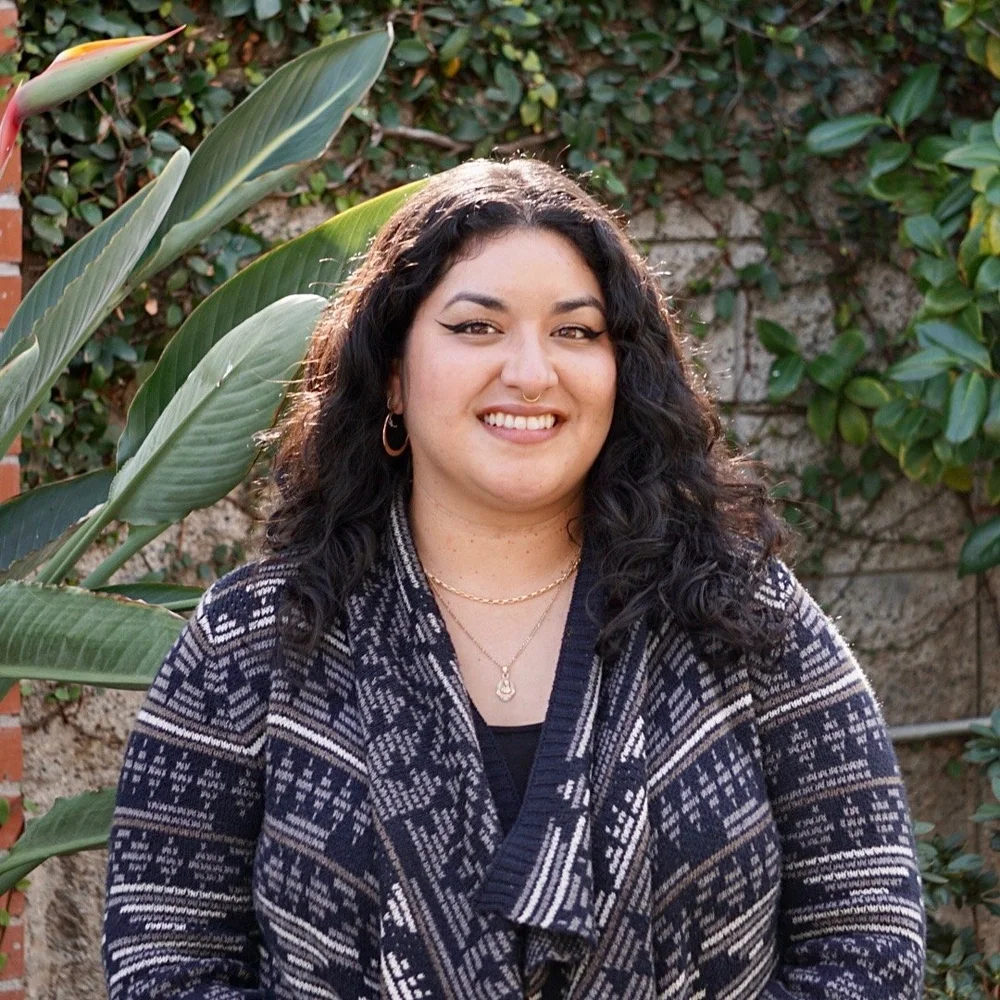
Ariadna Armenta, LCSW #102477
Ariadna is a CBT-trained therapist who identifies as a first-generation Mexican-American, bisexual, femme therapist practicing CBT, DBT, ACT, and EMDR. She brings a culturally humble, intersectional lens to adults navigating anxiety, depression, trauma, and identity.
Learn more →
Christina Harrison (they/them; she/her), LCSW #99941
Christina is a certified CBT clinical trainer. They work with adults navigating anxiety, depression, self-worth, and complex identity. They create an affirming, nonjudgmental space where clients can challenge the beliefs holding them back and build lives that feel like theirs.
Learn more →
Gonji Lee (they/them), LCSW #88522
Gonji is a CBT-trained therapist committed to affirming care for neurodivergent, BIPOC, and LGBTQ+ communities in Los Angeles. They work with teens and adults navigating anxiety, OCD, depression, and the unique stressors of living in marginalized identities.
Learn more →
Rozheen Barekatein (she/her), ACSW #123348
Rozheen is an Iranian-American therapist and daughter of immigrants who draws from CBT, ACT, and Motivational Interviewing. She specializes in supporting children of immigrants, QTBIPOC, and SWANA/MENA communities navigating identity, belonging, anxiety, and depression.
Learn more →CBT Therapy Across Greater Los Angeles
We serve clients via secure telehealth throughout Los Angeles and all of California. We do not currently offer in-person sessions.
Common Questions About CBT in LA
What does a CBT session actually look like?
A CBT session is collaborative and structured. You and your therapist will usually review how the past week went, and identify a specific thought pattern or situation to work through. You might complete thought records, do brief exposures, or work through a problem-solving exercise. Most clients also do light between-session practice, such as brief check-ins with their own thinking, or small behavioral experiments. This can be tailored to what you have capacity for.
Is CBT effective for anxiety?
Yes! CBT is considered the gold-standard treatment for generalized anxiety, social anxiety, panic, health anxiety, and phobias. It works by interrupting the avoidance cycle that keeps anxiety in place, and helping you build tolerance for uncertainty. At Nokdu, CBT is adapted for people whose anxiety is partly rooted in racial trauma and institutionalized marginalization, not just individual thought patterns.
Can CBT work with ADHD?
Yes, but we do not believe in "curing" or "treating" ADHD. CBT can be helpful in building skills to navigate ADHD-specific experiences in a prejudiced world, like internalized stigma, self criticism and building motivation. Standard CBT assumes a linear, structured way of engaging with information. Our therapists are trained to adapt CBT for ADHD, autism, and other forms of neurodivergence. We focus particularly on shame reduction, executive functioning support, and building self-compassion alongside practical skills.
How is CBT at Nokdu different for BIPOC and LGBTQ+ clients?
We don't treat marginalized identities as a side quest, they're part of the main storyline. CBT traditionally focuses on changing "distorted" thinking, but for BIPOC, LGBTQ+, QTIBIPOC, and POC clients, many painful thoughts are accurate responses to oppressive conditions. Our therapists hold that nuance. We adapt cognitive work to validate experiences of discrimination, racial trauma, and systemic harm while building tools for resilience, self-worth, and agency.
What is the difference between CBT and DBT?
DBT (Dialectical Behavior Therapy) was developed from CBT but has some differences. DBT adds acceptance-based strategies and a structured skills curriculum specifically designed for chronic emotion dysregulation. If you're dealing with intense mood swings, self-harm, or repeated interpersonal crises, DBT is often a stronger fit. CBT tends to be better suited for anxiety, depression, and OCD. Many people benefit from both, and our therapists can help you figure out which approach to prioritize.
Does CBT work via telehealth?
Yes. Telehealth CBT is highly effective. Especially for those experiencing anxiety, practicing skills in your actual environment (home, work, daily life) can be a powerful opportunity. We offer secure video sessions to clients throughout Los Angeles and all of California.
Do you accept insurance for CBT therapy?
We are not in-network with any insurance companies. If your PPO plan covers out-of-network services, we'll provide a monthly superbill you can submit for reimbursement. We also have limited sliding scale availability for clients who need it. Please ask during your free consultation.
Is CBT helpful for racial trauma or minority stress?
Yes, though it requires an intentional approach to it. Experiences like minority stress, racial trauma, imposter syndrome and imposter syndrome should not be pathologized or viewed as cognitive errors. Our CBT therapists in Los Angeles work with BIPOC, POC, LGBTQ+, and QTIBIPOC clients to build cognitive and behavioral tools that account for this reality. They will validate the larger systems that contribute to distress while helping you build your capacity for resilience, self-agency, and empowerment.
Ready to Start CBT Therapy in Los Angeles?
Schedule a free 20–30 minute consultation with one of our CBT therapists. Affirming care for BIPOC, LGBTQ+, QTIBIPOC, and neurodivergent communities. Telehealth available statewide in California.